MS-RSM Trainees Showcase their Research during Thesis Symposium
On January 16, 2026, the MS-RSM Thesis Symposium featured the nine MS-RSM second year thesis students and the research conducted during their time in the master’s program. Northwestern’s Center for Reproductive Science (CRS) community was invited to view each student’s presentation and gain insight into the range of research projects from these nine reproductive science and medicine trainees: Andi Beaudouin, Annapurna Sai Josyula, Caitlin Buchholz, Desiree Franklin, Ibtihaj Khan, María Verónica Morales Zapata, Reva Marwah, Sakshi Venkat Rao, and Tania Castro Modesto. A few highlights of this year’s thesis talks showcased the trainees hard work and diversity of research topics of being investigated. 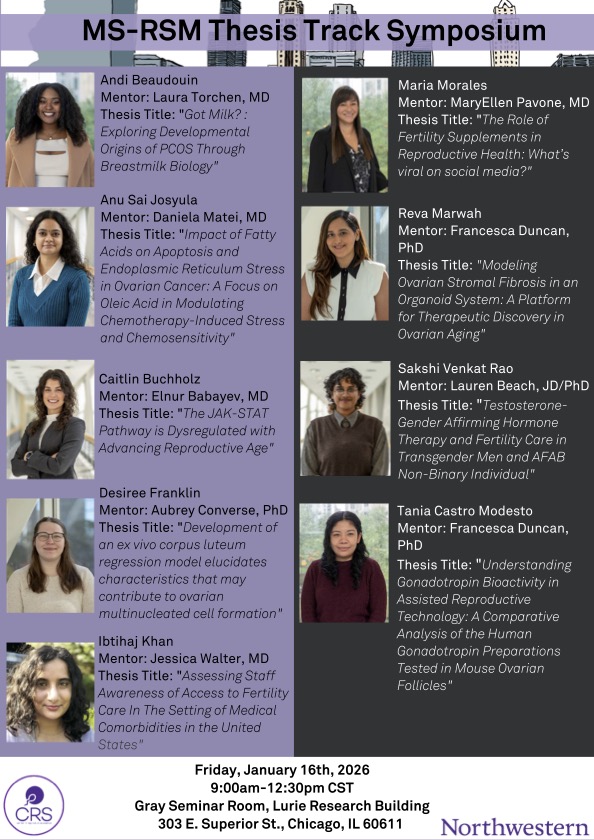
In Dr. Torchen’s lab, Andi Beaudouin explored how biological differences in human milk among mothers with PCOS might shape infant metabolic outcomes. Andi’s in-depth work on PCOS gives insight on early childhood nutrition, and sets a foundation for future work on the best breastfeeding practices for people with PCOS and/or other androgenic or insulin-resistant disorders.
From Dr. Pavone’s lab, María Verónica Morales Zapata examined fertility supplements on social media, describing the space as a “booming and often confusing world” where information is widely shared but rarely evidence-based, underscoring the gap between online content and clinical outcomes. Maria also worked on developing a practical dashboard to help clinicians track emerging supplement trends and address patients’ exposure to online fertility information in real time, translating her thesis findings into tools that support patient education and clinical counseling.
Within Dr. Daniela Matei’s lab, Annapurna Sai Josyula investigated how unsaturated fatty acids, especially oleic acid, can change ovarian cancer cells’ stress responses and survival pathways, which may affect how well chemotherapy works. Annapurna notes, “What surprised me most was how powerfully metabolism alone could shift therapeutic outcomes, specifically enabling cancer cells to survive even high doses of chemotherapy, revealing that lipid availability may play a central role in drug resistance.”
Focusing on ovarian aging, Caitlin Buchholz, a student in Dr. Elnur Babayev’s lab, showed that key signaling changes involving the JAK-STAT pathway, occur earlier than commonly assumed and are concentrated within the ovarian stroma, emphasizing the importance of the follicular environment over time. Caitlin emphasized how, “Ovarian aging begins much earlier than most people realize and is influenced not only by eggs, but by the surrounding environment that supports follicle growth and function.”
This symposium was a wonderful opportunity for these students to communicate their progress and prepare themselves for their thesis defense. The great questions from the CRS community will help them focus on their final analyses and potential future directions on their project.