Artificial Intelligence is Transforming Reproductive Science and Medicine
On June 5, 2026, the CRS Training Grant in Reproductive Science, Medicine and Technology hosted the first Transformative Technologies Forum, a half day event aimed at exploring emerging transformative technologies that are shaping the future of reproductive science and medicine. This trainee organized and led event, brought together leaders and future innovators in the field to showcase methods of leveraging artificial intelligence for data analysis for reproductive scientists. 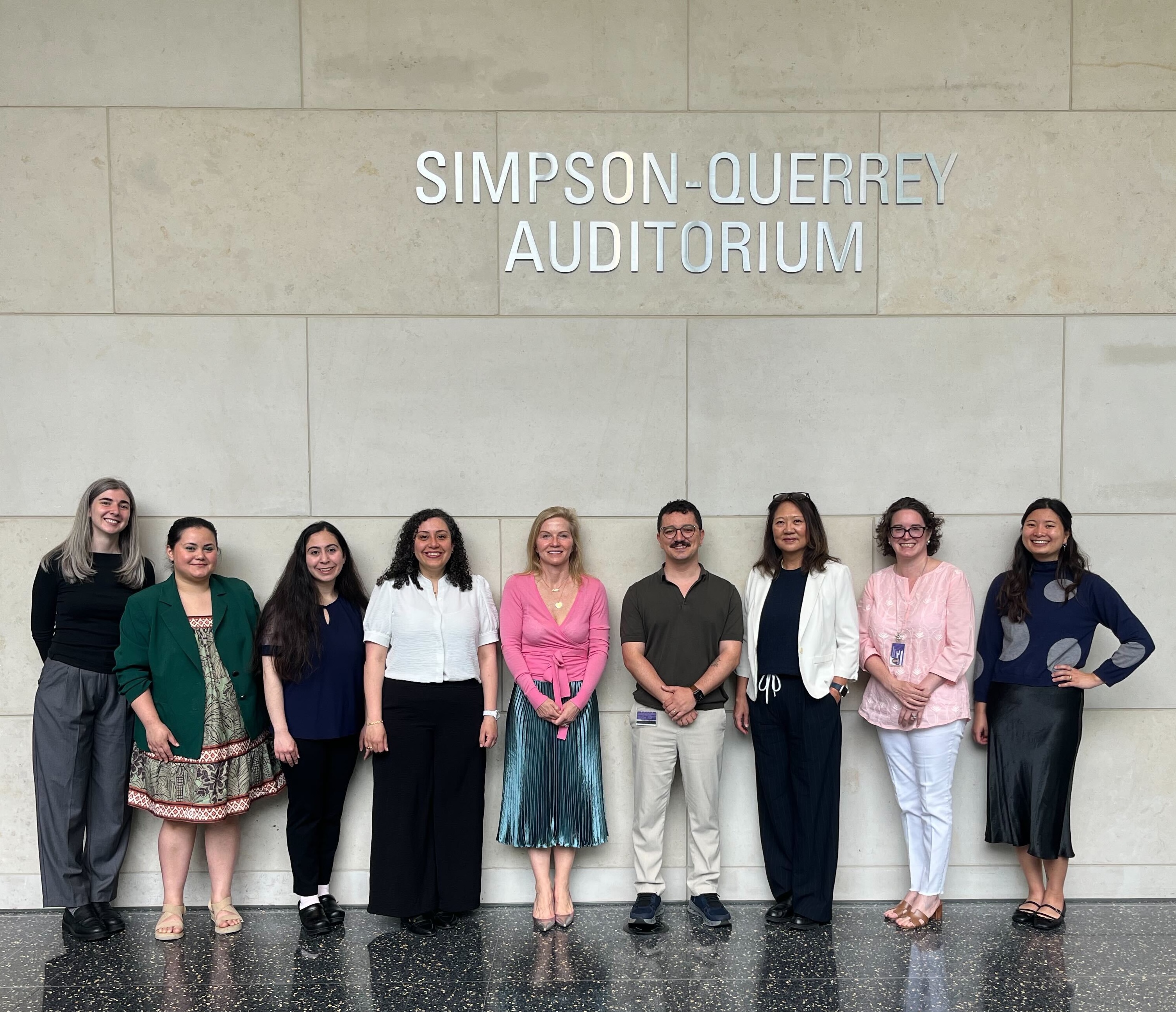
The keynote address, “The future of women’s health: What AI and new biosignals can unlock about female biology”, was delivered by Dr. Frida Polli, PhD, AI Founder/CEO, Visiting Innovation Scholar, Schwarzman College of Computing, MIT, Female Medicine through Machine Learning. Focusing on women’s health, Dr. Polli shared with the audience how her work utilizing AI assistance is unlocking new information on biosignals in female biology. Recounting her cross-disciplinary collaborations, Dr. Polli highlighted that clinical and bench science innovations are better able to merge data discovery and extrapolate new and interesting avenues of research investigation.
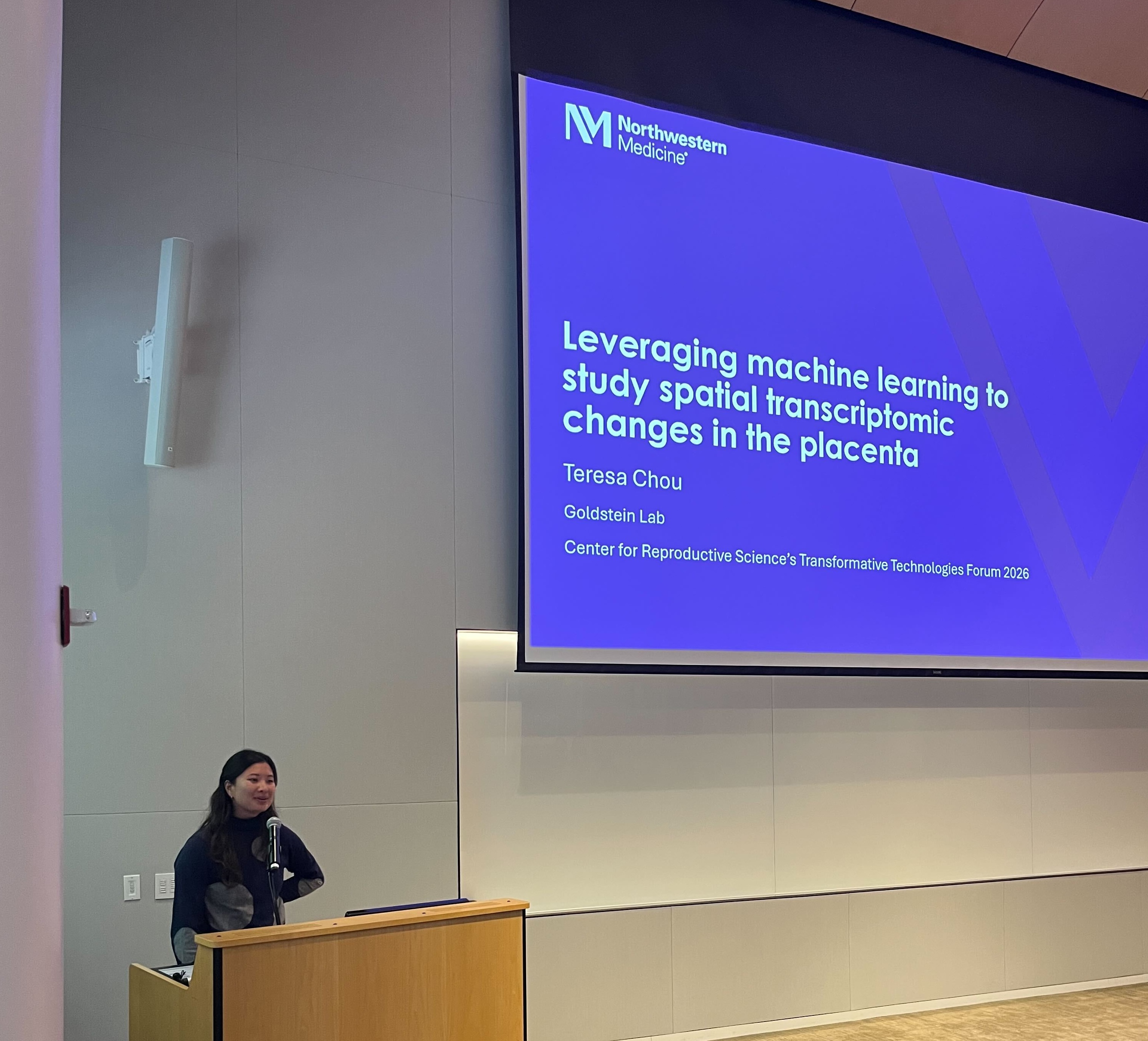
Not only is AI transforming the landscape of data science in reproductive science and medicine, but it is also shaping and influencing new generations of scientists. Three trainees highlighted their use of AI in their research as they navigate their pre- and postdoctoral training. Teresa Chou, a T32 trainee and Medical Scientist Training Program graduate student in Dr. Jeffrey Goldstein’s lab, addressed the audience in her talk, “Leveraging machine learning to study spatial transcriptomic changes in the placenta” where she discussed using AI and machine learning algorithms to ask questions about if molecular signals can indicate placental dysregulation and infection.
Dr. Marina Ayad, PhD, a postdoctoral fellow in the Dr. Lee Cooper’s lab, a frequent collaborator of the Goldstein lab, discussed, “AI-based analysis of placental whole slide images”, and provided the audience with an excellent tutorial on how AI and machine learning can help researchers maximize data analysis from histological samples.
 AI technologies like Chat GPT and Claude, can act as virtual assistants, helping to organize data and to provide strategies in research projects. Harun Cingoz, a Driskill Graduate Program student in Dr. Julie Kim’s lab did just that. In his talk, “Using AI as personal assistant for single nuclei multiome analysis”, Harun provided the audience a guide of how he utilized AI platforms to assist in his data analysis, helping to organize and analyze a large subset of data to better understand single cell nuclei data obtained from uterine tissue.
Rounding out the forum, Dr. Elnur Babayev, MD, an Assistant Professor of Obstetrics and Gynecology at Northwestern, discussed “The use of Artificial Intelligence in Reproductive Medicine”. From IVF data to analyzing other clinical patient data this technology is assisting clinicians to better provide diagnoses, skyrocketing reproductive medicine into the future.
However, this innovation comes with tempering, how will this evolve the research space and preserve the curiosity and ingenuity of the human mind. Indeed, AI is a powerful tool, bringing data analysis into a new and faster dimension and like any groundbreaking tool we as scientists must assess its worth, power, and limitations in our science.