CRS Scientist Spotlight on Brianna Thompson
Brianna Thompson is a doctoral graduate student in the Laronda Lab. Her research focuses on building prepubertal human and murine testicular organoids and understanding how seminiferous tubule-like structures form within this model system. Brianna is also a CRS T32 trainee.
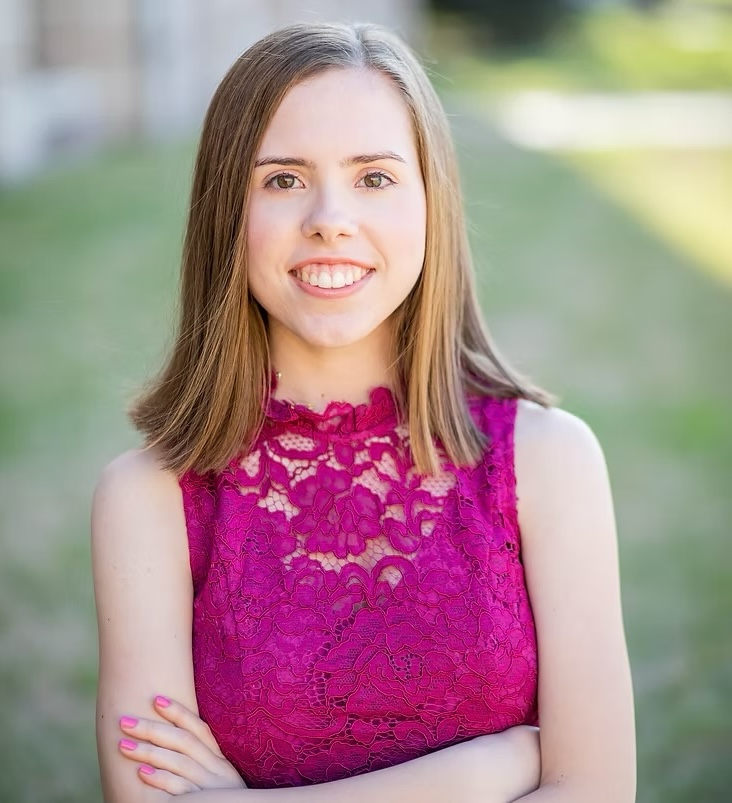
Thesis Mentor: Monica Laronda, PhD
Thesis Title: "Microenvironmental Control of Seminiferous Tubule Architecture and In Vitro Spermatogenesis in Testicular Organoids"
What brought you to join the CRS community and what is your current position?
I am a second year PhD candidate in Dr. Monica Laronda’s lab. After joining the Driskill Graduate Program, I attended a talk given by Monica Laronda about her ovarian and testicular biology research. This talk sparked my interest in CRS, and after rotating in the Laronda lab and experiencing the community CRS fosters through weekly Reproductive Research Updates and other educational and social events, I wanted to join CRS for my graduate school training.
Could you describe your research?
My research is focused on building prepubertal human and murine testicular organoids and understanding how seminiferous tubule-like structures form within this model system. By optimizing the microenvironmental cues that govern tubule-like structure formation and somatic cell maturation within these models, I hope to achieve in vitro spermatogenesis from prepubertal human tissue. Generating in vitro models like organoids that recapitulate native-similar morphology and signaling will enable better understanding of testicular biology and could one day provide a high-fidelity model for pharmacology or toxicology testing.
What aspect(s) of CRS do you find most valuable?
Connecting with the CRS community has been invaluable during my time at Northwestern. The community is filled with enthusiastic scientists with diverse research backgrounds and expertise, and learning from them has been a crucial part of my time in CRS. I appreciate the support I have already received from CRS members and look forward to paying it forward as I continue my training.
What has been the most valuable aspect to your training as a reproductive scientist?
The weekly Reproductive Research Updates and being part of the CRS T32 Training Program have been the most valuable aspects of my training as a reproductive scientist. Prior to joining the Laronda Lab, I was outside the reproductive science field, so these platforms have greatly expanded my knowledge of it. The Training Program has allowed me to connect with faculty and peers who are also passionate about the field and who have offered insight to help me improve my own science as I have embarked on my thesis research.
What is one piece of advice you would give to young scientists starting in their journey in science?
I encourage young scientists to explore diverse research questions before dedicating themselves to a narrow subject area. Learning how to perform research across multiple fields can provide valuable skills for unique problem solving later in a career. Techniques and approaches to scientific questions I honed as a microbiology intern have been essential to my success as a reproductive science PhD student.
What do you think will be the next big contribution in the reproductive biology field?
I foresee that new in vitro and ex vivo models will be used more commonly in reproductive biology as an alternative or precursor to in vivo experiments. Many labs across the entire scientific community have published on alternative model systems and, as these models are further improved, I think labs will pivot to utilizing these higher-throughput and lower-cost animal model alternatives.
What hobbies do you have outside of the lab?
I love to country dance, go to concerts, and collect art.