CRS Scientist Spotlight on Maggie Stapleton
Maggie Stapleton is a PhD candidate in the Kozorovitskiy Lab. She is also a CRS T32 trainee. Her research focuses on how oxytocin and dopamine producing neurons act differently before, during, and after pregnancy.
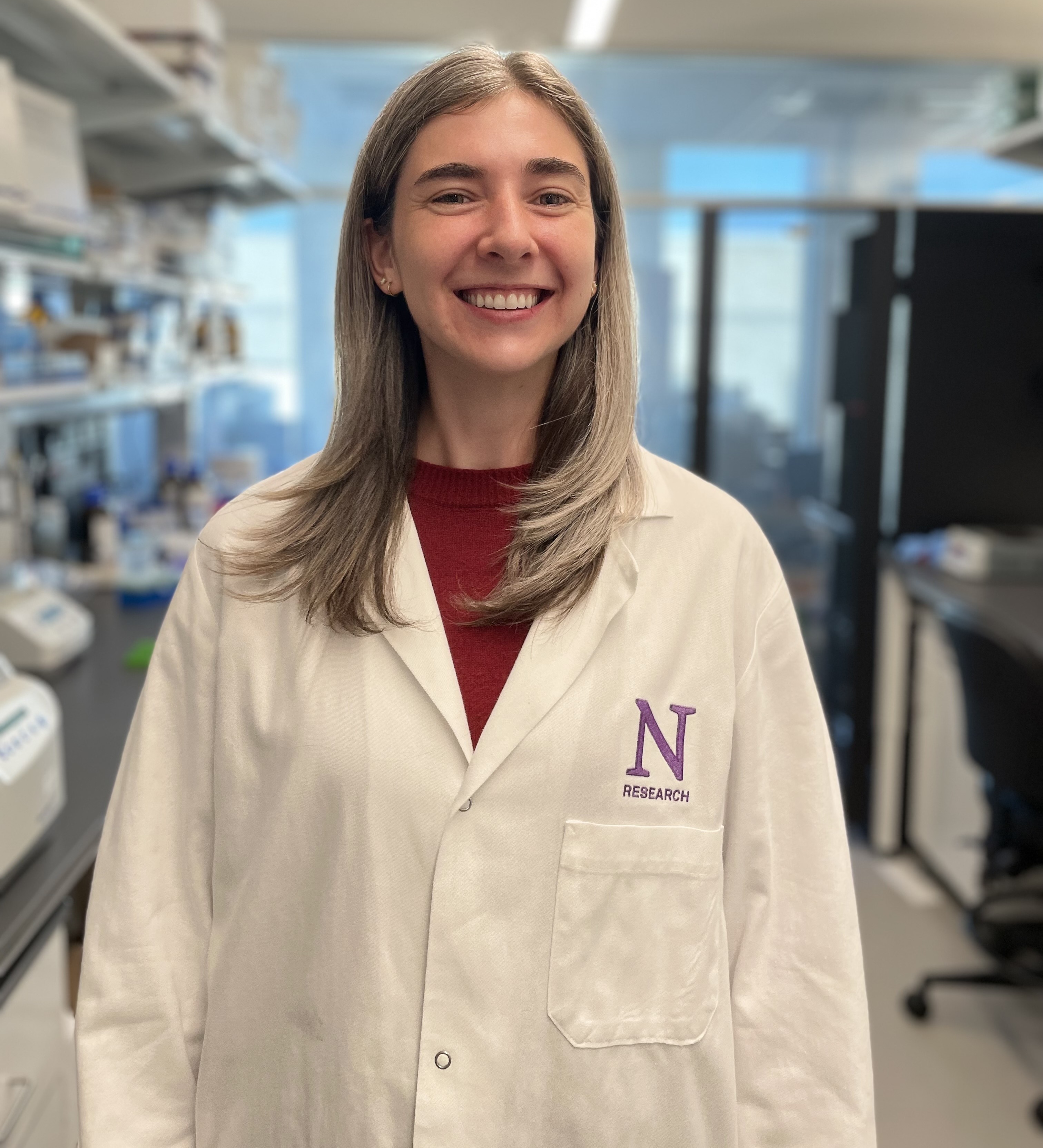
Mentor: Yevgenia Kozorovitskiy, PhD
Thesis Project: "Sex and experience dependent proteomic mapping of oxytocin and dopamine neurons"
What brought you to join the CRS community and what is your current position?
I’ve always been fascinated by how multiple biological systems work together to influence tissue development or function, making reproductive science the perfect niche to study. As a technician before graduate school, I worked on characterizing placental functions non-invasively with the goal of understanding how placental outcomes may influence brain and heart development. When I came to graduate school here and began designing my doctoral thesis, I knew I wanted it to involve the CRS as much as possible.
Could you describe your research?
Broadly, I am interested in how hormones act on brain cells to modify reproductive behaviors. Specifically, oxytocin and dopamine producing neurons act differently before, during, and after pregnancy. On a cellular level, it’s unknown how the cellular machinery accommodates an increase in oxytocin generation and release or the effect of this release on neighboring cells, like the dopamine neurons. Proteins are the primary effectors of cellular functions, so I utilize proteomics and phosphoproteomics to elucidate the biological processes in this crucial cell type. With these experiments, I hope to reveal key processes altered according to reproductive stage. I anticipate these results could elucidate mechanisms responsible for evolutionary ancient behaviors that could improve the health and well-being of parents.
What aspect of CRS do you find most valuable?
I love how interdisciplinary and diverse the science and scientists are! There are so many unique perspectives and backgrounds that make sharing our research exciting and motivating.
What has been the most valuable aspect to your training as a reproductive scientist?
Again, I would have to point to the interdisciplinary nature of the program. My project and the way I interpret results have benefited from neuroscience, endocrinology, and reproductive biology perspectives.
What is one piece of advice you would give to young scientists starting in their journey in science?
Be realistic about what you can get done in a day. Knowing your limits will protect you from last minute cramming as well as burnout. Setting realistic goals and meeting them is the best way I’ve found to continue making progress. Projects like these are marathons, not sprints!
What do you think will be the next big contribution in the reproductive biology field?
There is so much still unknown about how estrogen and progesterone operate in different regions in the brain. I think if we can develop the right tools and models to study this, we can learn a lot about how these hormones influence mood, memory, and cognition providing valuable insight into PMDD, PPD, and more.
What hobbies do you have outside of the lab?
I love to spend free time by the lake, either jogging, biking or swimming. I also love to read, visit museums, and travel.