CRS Scientist Spotlight on María Morales, MD, MS
María Morales is an MD and recent graduate of the MS-RSM thesis track program. Her thesis research examined fertility supplements promoted on social media and their impact on patient perceptions and counseling in IVF care. María will soon begin a new position as a Clinical Research Coordinator.
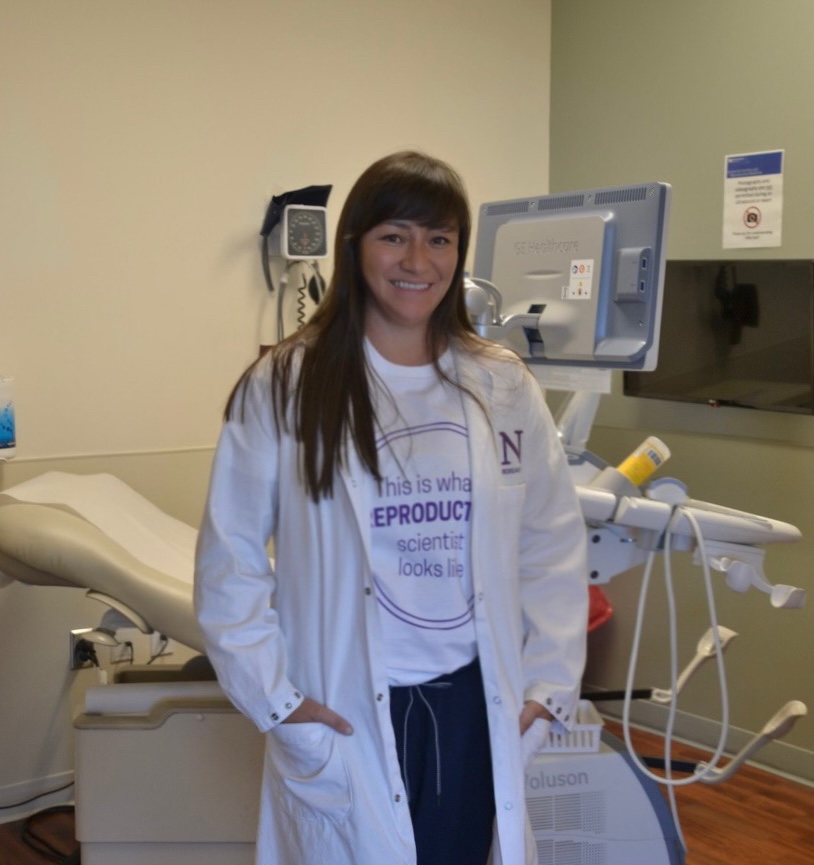
Mentor: MaryEllen Pavone, MD
Thesis Project: "The Role of Fertility Supplements in Reproductive Health: What’s viral on social media?"
What brought you to join the CRS community and what is your current position?
I am a recent graduate of the thesis track of the MS-RSM program at Northwestern University Feinberg School of Medicine. My thesis research was conducted under the mentorship of Dr. MaryEllen Pavone at the Center for Fertility and Reproductive Medicine. Within CRS, I have served as a writer on the CRS Editorial Committee, an organizing committee member for the Upper Midwest Summit for Reproductive Science, and a teaching assistant in the MS-RSM program.
My interest in advancing reproductive medicine and bridging clinical care with research led me to join the CRS community. After completing my MD at Universidad Mayor de San Simón in Bolivia and a Master’s degree in Assisted Human Reproduction at the European University of Madrid in collaboration with IVI Clinic, I gained clinical research experience at the Centre Hospitalier Universitaire Vaudois (CHUV) in Switzerland. These experiences motivated me to further develop my skills as a reproductive scientist through rigorous research training.
I am excited to be joining Northwestern Medicine’s Center for Fertility and Reproductive Medicine as a Clinical Research Coordinator, where I will contribute to clinical research aimed at advancing reproductive health and patient care.
Could you describe your research?
My thesis research, “Fertility Supplements in Reproductive Health: What’s Viral on Social Media?”, examines how fertility-related supplements and reproductive health information are communicated on digital platforms, particularly Instagram and TikTok. The goal of this work is to evaluate trends, engagement patterns, and the relationship between social media–driven fertility recommendations and evidence-based reproductive medicine. As more patients use online platforms to seek health information, understanding the quality and impact of this content is increasingly important for improving patient counseling and reproductive health education, especially for patients undergoing IVF treatments. As part of this project, I also developed a practical dashboard to help clinicians monitor emerging fertility supplement trends and better understand the online information their patients may encounter. This research is currently being prepared for publication, has been presented at Northwestern research events, and will be presented as an oral presentation at the ASRM Scientific Congress in Baltimore. In addition, I have collaborated on other reproductive research projects focused on acupuncture and preimplantation genetic testing (PGT) in IVF, as well as postpartum depression education, which have further expanded my research experience in reproductive medicine.What aspect(s) of CRS do you find most valuable?
The most valuable aspect of CRS has been the opportunity to become part of a collaborative and multidisciplinary reproductive science community. CRS provides an environment where scientists, clinicians, and trainees work together toward advancing reproductive health. One of the greatest opportunities has been the ability to participate in multiple research projects beyond my thesis and collaborate with individuals from different areas of reproductive medicine. These experiences have allowed me to better understand how research findings can be translated into clinical applications. I have also greatly valued the professional development opportunities CRS has provided, which have helped me grow as a reproductive scientist and expand my perspective within the field.
What has been the most valuable aspect to your training as a reproductive scientist?
As a physician with a background in reproductive medicine, I have always been interested in improving patient outcomes, and my training at CRS has helped me better understand the research process behind those advances. Through the MS-RSM program and CRS, I have developed skills in research methodology, scientific writing, data analysis, and interdisciplinary collaboration. I have also benefited from additional professional development opportunities, including the ECHO Training Program, which strengthened my understanding of patient-centered communication and fertility preservation counseling. Beyond technical skills, my training has reinforced the importance of collaboration, scientific communication, and translating research into meaningful improvements in patient care.
What is one piece of advice you would give to young scientists starting in their journey in science?
My advice would be to remain curious and open to new experiences. Science is a continuous journey of learning, and some of the most valuable growth comes from exploring new ideas, engaging with your scientific community, building meaningful connections, and learning from mentors and colleagues. Research is not only about generating data; it is also about asking meaningful questions, communicating ideas, and continuously growing as a scientist.
What do you think will be the next big contribution in the reproductive biology field?
I believe some of the next major advances in reproductive biology will come from the integration of emerging technologies, including artificial intelligence, advanced data analysis, genomics, and personalized medicine. Artificial intelligence has the potential to transform reproductive medicine by improving embryo assessment, predicting treatment outcomes, analyzing complex biological data, and supporting individualized fertility care. Additionally, as patients increasingly rely on digital platforms for reproductive health information, improving communication between scientific evidence and public understanding will become essential. Combining technological innovation with accurate and accessible education will be an important component of the future of reproductive healthcare.
What hobbies do you have outside of the lab?
Outside of research, I enjoy traveling, exploring new places, and discovering different cultures. I especially enjoy exploring Chicago, particularly during the summer, through outdoor activities, trying new restaurants and places, and spending time with friends and family. I also enjoy staying active through exercise and sports, which has been a great way to explore the city, experience new activities, and continue discovering everything Chicago has to offer.