CRS Scientist Spotlight on Kate Lowrie
Kate Lowrie is a summer research intern in the Duncan Lab. Her project focused on characterizing ovarian somatic organoids as a model of reproductive aging. She is a senior at Indiana University Bloomington.
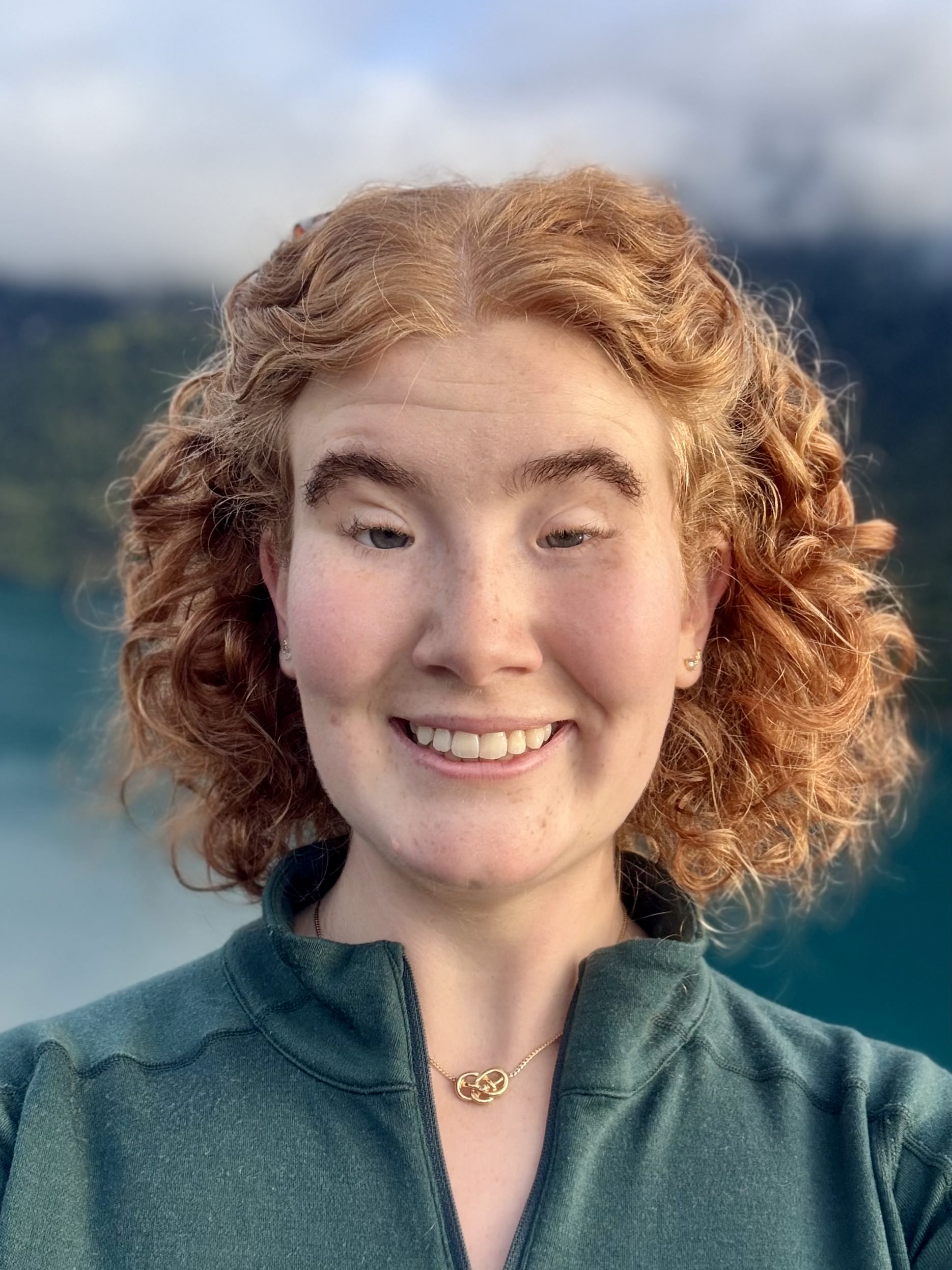
Mentor: Francesca E. Duncan, PhD
Project title: "Characterizing Ovarian Somatic Organoids as a Model of Reproductive Aging"
Can you tell us about yourself and your educational focus at Northwestern?
I'm a senior at Indiana University Bloomington majoring in Molecular Life Sciences with minors in Chemistry, Microbiology, and Environmental Science. This summer, I joined the Duncan Lab through Northwestern's Center for Reproductive Science, where I've had the opportunity to immerse myself in reproductive biology research. Throughout college, I've become increasingly interested in reproductive science, and my time at Northwestern has given me the chance to learn from researchers studying a wide range of questions across the field. It's been an exciting place to learn in and has reinforced my interest in reproductive biology.
Could you describe the research that you conducted this summer?
This summer, I worked on characterizing ovarian somatic organoids as a model of reproductive aging in the Duncan Lab. My project was supported by the Center for Reproductive Science's 2026 Marcia L. Storch Scholarship Fund for Undergraduate Students. Using immunohistochemistry, I examined the cellular composition of the organoids and compared them to ovarian tissue to better understand how well they reflect the biology they're designed to model. I also analyzed microscopy images to quantify staining patterns and help evaluate the organoids as a research model. It was exciting to contribute to a project developing new tools to study ovarian aging, which has the potential to improve our understanding of reproductive health.
What has made the most lasting impression during your summer research internship?
The people. Everyone was incredibly generous with their time, whether it was answering questions, teaching me a new technique, or talking through why an experiment worked - or didn't. As an undergraduate, it was exciting to be part of a lab where asking questions was encouraged and everyone genuinely wanted to help each other learn. That kind of environment made it easy to stay curious, and it reminded me how much good science depends on people who are willing to share what they know.
What aspect(s) of CRS do you find most valuable or look forward to engaging in?
One of my favorite parts of CRS was attending the Transformative Technologies Forum. Hearing researchers talk about how artificial intelligence and machine learning are being applied to reproductive science showed me how quickly the field is evolving. It was interesting to see people from different backgrounds approaching similar questions with completely different tools and perspectives. It made me appreciate how much innovation in reproductive science comes from bringing together ideas from different fields.
What are your future educational and career goals?
After graduating, I plan to pursue an MD-PhD and become an OB/GYN physician-scientist. I hope to care for patients while leading a laboratory focused on ovarian biology and reproductive health. I'm especially interested in understanding the mechanisms behind infertility and gynecologic disease and using that knowledge to develop better treatments. I want to build a career where caring for patients and asking scientific questions continually inform one another. This summer confirmed that physician-scientist training is the path I want to pursue and strengthened my excitement for a career in reproductive science.
What is one piece of advice you would give to young students in starting in their journey in science?
Don't be afraid to ask questions. It can be intimidating to join a new lab when it feels like everyone else knows more than you, but every researcher started somewhere. The people I've learned the most from have always been the ones willing to explain not just how something works, but why. Being curious and asking questions has helped me learn far more than trying to figure everything out on my own.
What hobbies do you have outside of the lab?
Outside of the lab, I enjoy playing piccolo in the Indiana University Marching Hundred and Big Red Basketball Band. Music has always been an important part of my life, and I love the sense of community that comes from performing with such a large group. Whenever I have free time, I also enjoy hiking, exploring new coffee shops, and spending time with family and friends.