CRS Scientist Spotlight on Rhianna Anglin
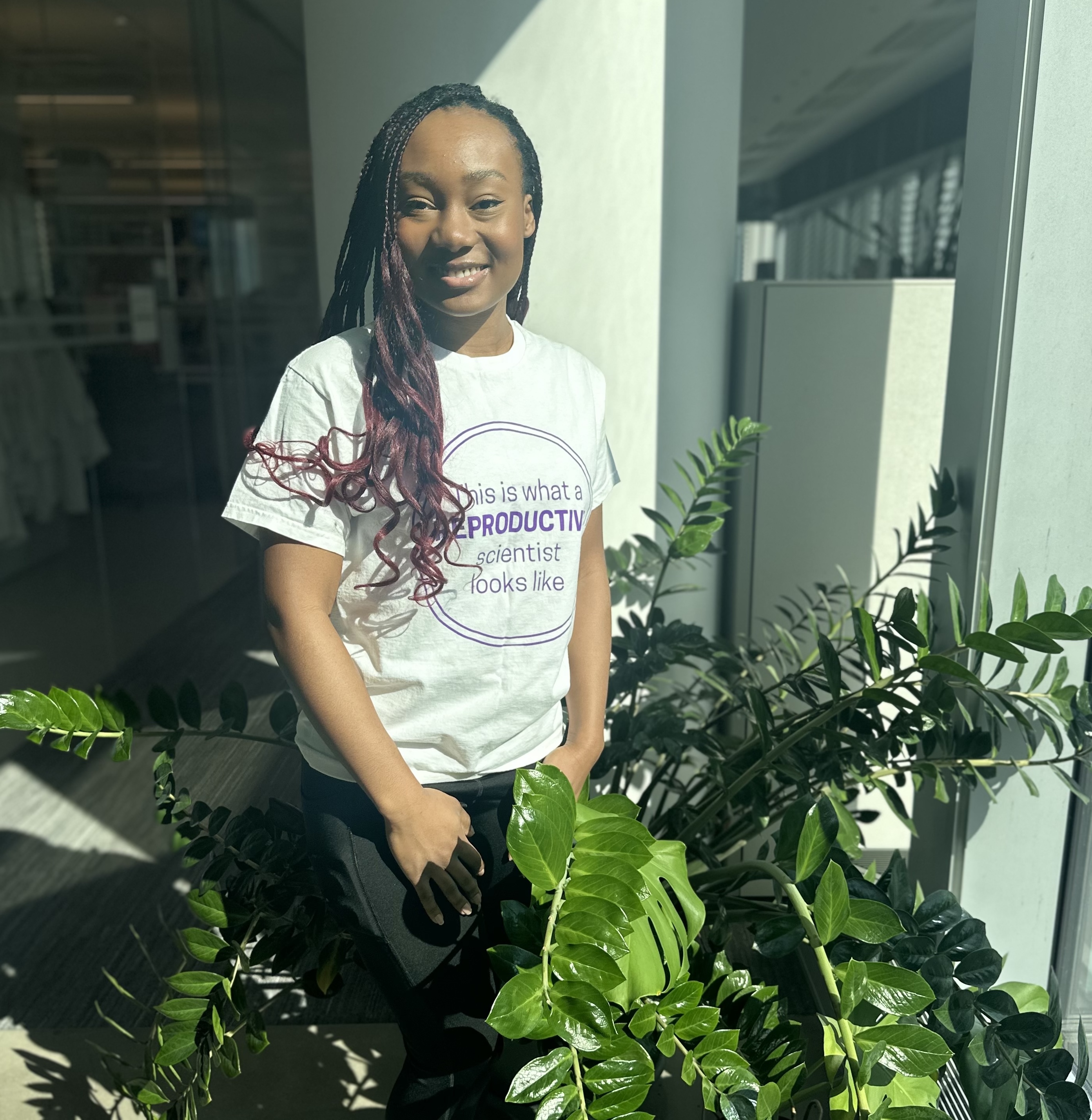
Rhianna Anglin is a student in the MS-RSM program on the non-thesis track. She is currently conducting research on how micronanoplastics (MNPs) impact placental development and function as a collaborative project with her cohort and with Dr. Pamela Monahan and Dr. Lindsey Block.
What brought you to join the CRS community and what is your current position?
I am currently a master’s student in the Reproductive Science and Medicine program on the non-thesis track. Originally, I am from Toronto, Canada, where there are limited options for specialized graduate programs in reproductive health. Because of this, I was motivated to seek opportunities beyond my home city that would allow me to grow both academically and professionally.
As I explored different programs, I was looking not only for strong academic training in reproductive science but also for a supportive and engaging community. It was important to me to find a space where I could build connections, collaborate with others, and learn from individuals with diverse interests in reproductive research and medicine. When I came across this program, I was encouraged by testimonials from both alumni and current students who spoke highly of the collaborative environment and networking opportunities. Joining CRS has allowed me to become part of a community that fosters both learning and connection, and it has been an important part of my experience as I continue to develop my knowledge and interests in reproductive health.
Could you describe your research?
My research focuses on how micronanoplastics (MNPs) impact placental development and function, and it is part of a collaborative project with other members of my non-thesis cohort. These particles are an emerging environmental pollutant formed from the breakdown of larger plastics, and human exposure to them is now considered unavoidable through food, water, and air. Specifically, we study how MNPs interact with trophoblast cells, which are essential for placenta development and function. Using established cell models, we examine how these particles affect different cellular processes that are critical for healthy placental development. Overall, this research is important because it helps us better understand how widespread environmental exposures may contribute to placental dysfunction and pregnancy complications, ultimately impacting both maternal and fetal health.
What aspect(s) of CRS do you find most valuable?
One of the most valuable aspects of CRS is the strong sense of community it fosters. I have had the opportunity to connect with individuals across different areas of reproductive research, which has broadened my perspective significantly. In particular, the weekly Reproductive Research updates have been incredibly beneficial. These sessions allow me to stay informed about current and emerging research, and I consistently learn something new each week. This exposure not only expands my knowledge but also helps me refine my own research interests.
What has been the most valuable aspect of your training as a reproductive scientist?
The most valuable aspect of my training has been learning how to truly think and work like a scientist. I entered the program without prior lab experience, and since then, I have gained extensive hands-on research skills. Beyond technical abilities, the program has helped shape my critical thinking, problem-solving, and scientific communication skills. It has been a transformative experience that has played a key role in developing my identity as a scientist.
What is one piece of advice you would give to young scientists starting in their journey in science?
If I could give advice to my younger self, it would be to not be afraid of change, even when it feels uncomfortable or uncertain. Moving from Toronto to Chicago was a major shift in my life, and at the time, it felt overwhelming. I was stepping into a completely new environment, both academically and personally, without knowing exactly what to expect. Throughout this journey, I faced challenges that pushed me outside of my comfort zone, from adapting to a new city to learning how to navigate a scientific field without prior experience. At times, those moments felt difficult, but looking back, they were some of the most important experiences for my growth. Every challenge and change I encountered opened doors to new opportunities that I would not have had otherwise. They helped me build resilience, gain confidence, and ultimately become the scientist I am today. I am genuinely thankful for those experiences because they shaped my path in ways I could not have predicted. So, my advice is to embrace change, even when it feels uncertain. There is always something to learn from those moments, and often, they lead you exactly where you are meant to be.
What do you think will be the next big contribution the reproductive biology field?
I think one of the next major contributions in reproductive biology will come from advances in embryology and assisted reproductive technologies. A specific area of promise is cell-free Preimplantation Genetic Testing (cf-PGT), which aims to determine the genetic status of embryos non-invasively using cell-free DNA from the blastocoel or embryo culture media. Unlike traditional biopsy-based PGT, cf-PGT offers the potential to reduce technical demands and minimize potential harm to the embryo. I’m excited to see where this research goes because I think it could have a profound impact on reproductive medicine.
What hobbies do you have outside of the lab?
Outside of the lab, I enjoy a variety of hobbies that help me stay balanced and inspired. I love reading and writing, but one of my favorite pastimes is attending concerts. Since moving to Chicago, I have attended several concerts as I enjoy discovering new artists and experiencing live music. For me, concerts are not only a form of entertainment but also a way to support artists and connect with creative expression.