Amander Clark, PhD, delivers Danielle Maatouk Memorial Lecture
On Friday, April 10, 2026, the Center for Reproductive Science hosted the Danielle Maatouk Memorial Lecture. The Danielle Maatouk Memorial Lecture is an annual event that honors Dr. Danielle Maatouk, PhD, a innovative early career scientist who worked at Northwestern University as an Assistant Professor of Obstetrics & Gynecology. Dr. Maatouk’s research investigated how changes in the epigenome regulate gene expression and cell fate determination during fetal development, with the goal of improving the genetic diagnosis of patients with disorders of sexual development. Dr. Maatouk’s legacy lives on and continues to inspire future reproductive scientists. 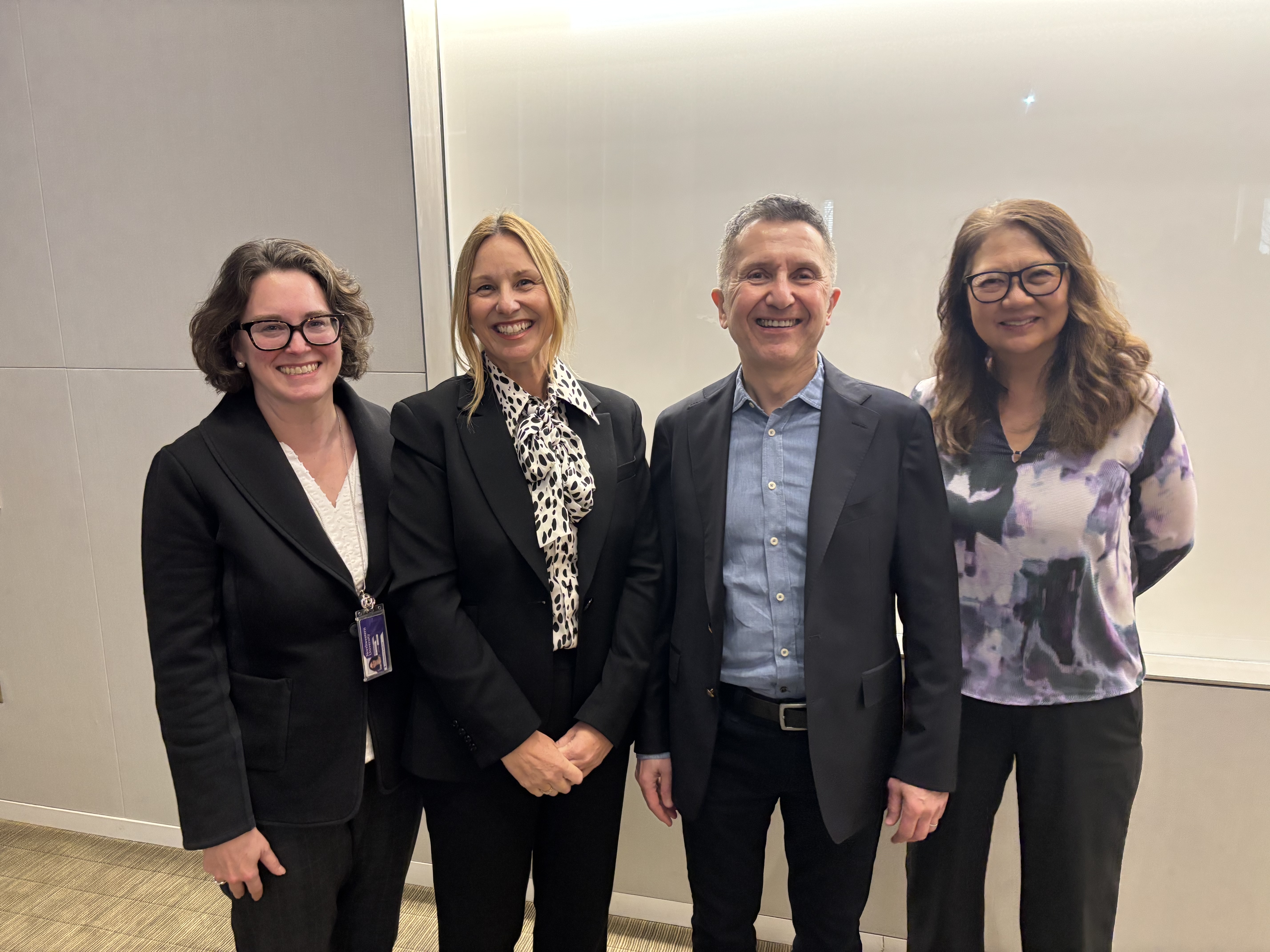
This year’s distinguished guest speaker, Dr. Amander Clark, PhD, is an award-winning scientist, Professor of Molecular, Cell, and Developmental Biology at UCLA, and the Founding Director of the UCLA Center for Reproductive Science, Health and Education. Dr. Clark’s research background as a postdoctoral fellow focused on the molecular mechanisms of human germ cell formation and the basic biology of human embryonic stem cells. Currently, her research group’s interests encompass ovarian health, formation of the ovarian reserve, and the creation of next generation tools and technologies using stem cells aimed at improving health and the health-span.
During the Danielle Maatouk Memorial Lecture, Dr. Clark presented “Improving Reproductive Health and Care Using Stem Cell Technologies.” To begin the lecture, she emphasized her fascination with how female germline cells interact with surrounding somatic ovarian cells and influence overall ovarian function. She then shifted to discuss how scientists can model early human germ cell development in the lab using stem cells, a process known as in vitro gametogenesis, which can help uncover the genes and pathways involved in fertility and infertility.
Throughout the lecture, Dr. Clark explained that her research group aimed to characterize the molecular mechanisms required for human primordial germ cells (hPGCs), which are the first embryonic progenitors in germ cell formation. By analyzing chromatin accessibility within hPGCs, her group identified that the transcription factor TFAP2C is required for germ cell differentiation. Her research group also identified LTR5Hs, a transposable element that becomes highly active and undergoes major epigenetic changes during the formation of hPGC–like cells in the lab. LTR5Hs is bound by key germ cell transcription factors, including TFAP2C, suggesting that these elements help coordinate either the acquisition or maintenance of early germ cells.
In addition to her overview of her research, Dr. Clark emphasized the importance of ensuring that reproductive science remains “equitable, accessible, and inclusive so that scientific innovation upstream can improve people’s lives downstream at the point of care,” especially as new reproductive technologies continue to emerge. The Center for Reproductive Science is extremely grateful for Dr. Clark’s insightful presentation and discussion.