CRS Lab Spotlight on the Torchen Lab
For this month’s Lab Spotlight, we are taking a closer look at the research questions, collaborations, and translational goals driving the work of the Torchen Lab at Ann & Robert H. Lurie Children's Hospital of Chicago and the Northwestern Center for Reproductive Science. Led by Dr. Laura Torchen, the lab focuses on how early-life metabolic and endocrine environments shape reproductive and long-term health outcomes, with an emphasis on polycystic ovary syndrome (PCOS), maternal metabolism, lactation biology, and developmental origins of disease. The group’s work bridges clinical endocrinology, reproductive science, nutrition, and translational pediatrics to better understand how maternal physiology may influence infant growth and future metabolic risk. 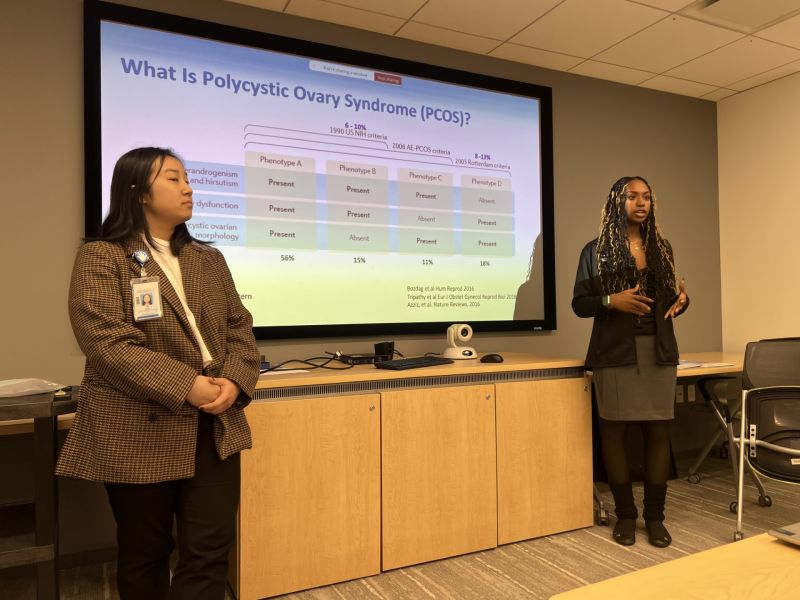
The Torchen Lab brings together clinicians, trainees, research coordinators, and collaborators across institutions to investigate how reproductive and metabolic conditions can affect both parents and offspring during critical developmental windows. The team includes Lili Pope, the lab’s clinical research coordinator, who supports participant recruitment, study operations, and longitudinal clinical research efforts, as well as Dr. Peggy Wu, a third-year pediatric endocrinology fellow whose work contributes to the lab’s growing translational and clinical research initiatives.
Much of the lab’s current work centers on understanding the composition of human milk in individuals with PCOS and how differences in milk composition may relate to infant feeding patterns, growth trajectories, and adiposity outcomes. These questions are especially important because PCOS is one of the most common endocrine disorders affecting reproductive-aged individuals, yet relatively little is known about how it may shape lactation and infant development.
The lab’s ongoing study follows mother-infant dyads longitudinally through pregnancy and infancy, collecting breast milk samples alongside maternal and infant clinical data. Researchers analyze macronutrients, metabolic biomarkers, and endocrine factors in human milk to identify physiologic differences associated with PCOS. Early findings from the group suggest that breast milk from mothers with PCOS may differ in carbohydrate and insulin concentrations compared to controls, highlighting the potential role of maternal metabolic health in shaping the infant nutritional environment. These studies are designed not only to characterize milk composition but also to better understand how feeding exposures during early life may contribute to later metabolic and reproductive outcomes.
A major strength of the Torchen Lab is its collaborative and interdisciplinary nature. The group works closely with investigators across Northwestern University Feinberg School of Medicine, Stanley Manne Children's Research Institute, and partner institutions, including the University of Michigan. These collaborations support specialized laboratory analyses, endocrine profiling, and biostatistical approaches that allow the team to connect molecular findings with clinically meaningful outcomes. The lab also benefits from access to the clinical research infrastructure at Lurie Children’s, enabling close integration between patient-facing research and translational laboratory science.
The Torchen Lab is also deeply invested in trainee development and mentorship. Graduate students, clinical trainees, fellows, and research staff contribute to all aspects of study design, participant recruitment, sample processing, data analysis, and scientific communication. Lab members regularly present their work through Northwestern Center for Reproductive Science programming, including Reproductive Research Updates and trainee symposia, while sharing findings at national meetings in endocrinology, reproductive medicine, and pediatric research. This collaborative environment encourages trainees to think critically across disciplines and develop research questions that connect basic science, clinical medicine, and public health.
As the medical field increasingly recognizes the importance of early-life exposures in shaping lifelong health, the Torchen Lab continues to explore how reproductive endocrinology and metabolism intersect during pregnancy, lactation, and infancy. By studying these relationships across generations, the group aims to generate insights that ultimately inform prevention strategies, improve maternal-child health outcomes, and deepen our understanding of reproductive and metabolic disease development.