CRS Lab Spotlight on the Block-Monahan Lab
For this month’s Lab Spotlight, we are highlighting the work of the Block-Monahan Lab, which supports the non-thesis research track of the Master of Science in Reproductive Science and Medicine (MS-RSM) program. Led by Drs. Lindsey Block and Pamela Monahan, the lab has explored a range of research topics over the years, including placental development and function using magnetic resonance (MR) imaging and histology; the interaction of Notch and Activin signaling pathways in ovarian development; the relationship between zinc sparks and post-ovulatory aging in mouse eggs; and the effects of triterpenoids on trophoblast cell function. In recent years, the Block-Monahan Lab has shifted its research focus to investigating the effects of micro- and nanoplastics on trophoblast cells in culture. 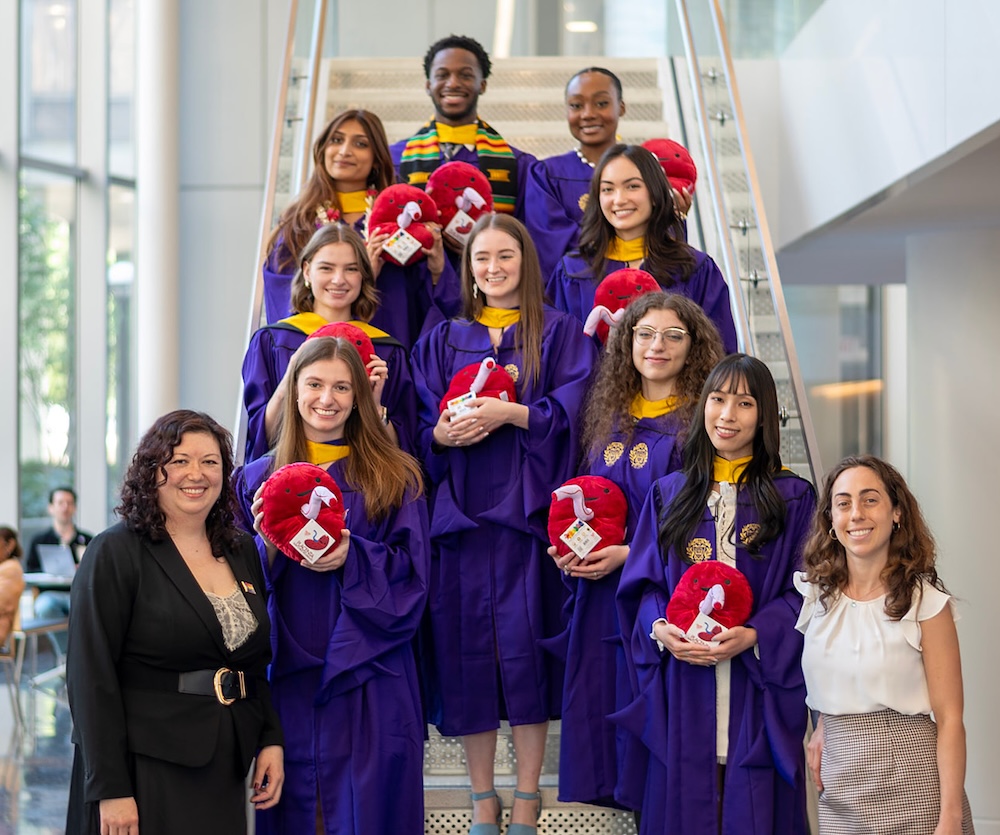
The non-thesis track of the Master of Science in Reproductive Science and Medicine program is designed to give students hands-on experience with the research process while building the critical thinking, collaboration, and scientific communication skills essential to careers in reproductive science and medicine. Over two quarters, students work in teams to develop unique, testable hypotheses, select appropriate model systems, and design and carry out research projects using the scientific method. This process requires students to plan experiments, identify appropriate controls and reagents, and gain experience with specialized equipment. Beyond generating research data, students learn to critically evaluate scientific evidence, interpret their findings, and communicate their work to a range of audiences, from the general public to scientific experts. Through this collaborative experience, students gain a deeper understanding of how research questions are developed and investigated, and how scientific discoveries can advance knowledge of reproductive health and disease.
One of the lab’s current student research projects explores the potential effects of micro- and nanoplastics on reproductive cell function, focusing on trophoblast cells, which play important roles in placental development and function. As microplastics become increasingly prevalent in the environment and are detected in human and animal tissues, understanding their potential effects on reproductive health has become an important area of investigation. This project provides students with an opportunity to apply the scientific method to an emerging research question, from developing a hypothesis and designing experiments to analyzing findings and considering their broader implications. By engaging with a timely and evolving area of reproductive science, students gain practical research experience while contributing to a greater understanding of potential environmental influences on reproductive health.
As the Block-Monahan Lab looks ahead, we are excited to welcome a new cohort of enthusiastic students who will build on this ongoing research into the effects of micro- and nanoplastics on reproductive cell function. With fresh perspectives, new ideas, and a shared commitment to scientific discovery, these students will continue exploring important questions at the intersection of environmental exposures and reproductive health while developing the skills to become the next generation of reproductive scientists.