Dr. Vassilios Papadopoulos delivers the 2026 Erwin Goldberg Lecture
The 2026 Erwin Goldberg Lecture in Male Reproduction, delivered on February 20, 2026, showcased how advances in reproductive biology are reshaping our understanding of human health and disease. Delivered by Dr. Vassilios Papadopoulos, Dean of the USC Alfred E. Mann School of Pharmacy and Pharmaceutical Sciences at the University of Southern California and an internationally recognized leader in steroidogenesis research, the lecture emphasized how advances in molecular reproductive science continue to reshape clinical medicine, toxicology, metabolism, and cancer biology. 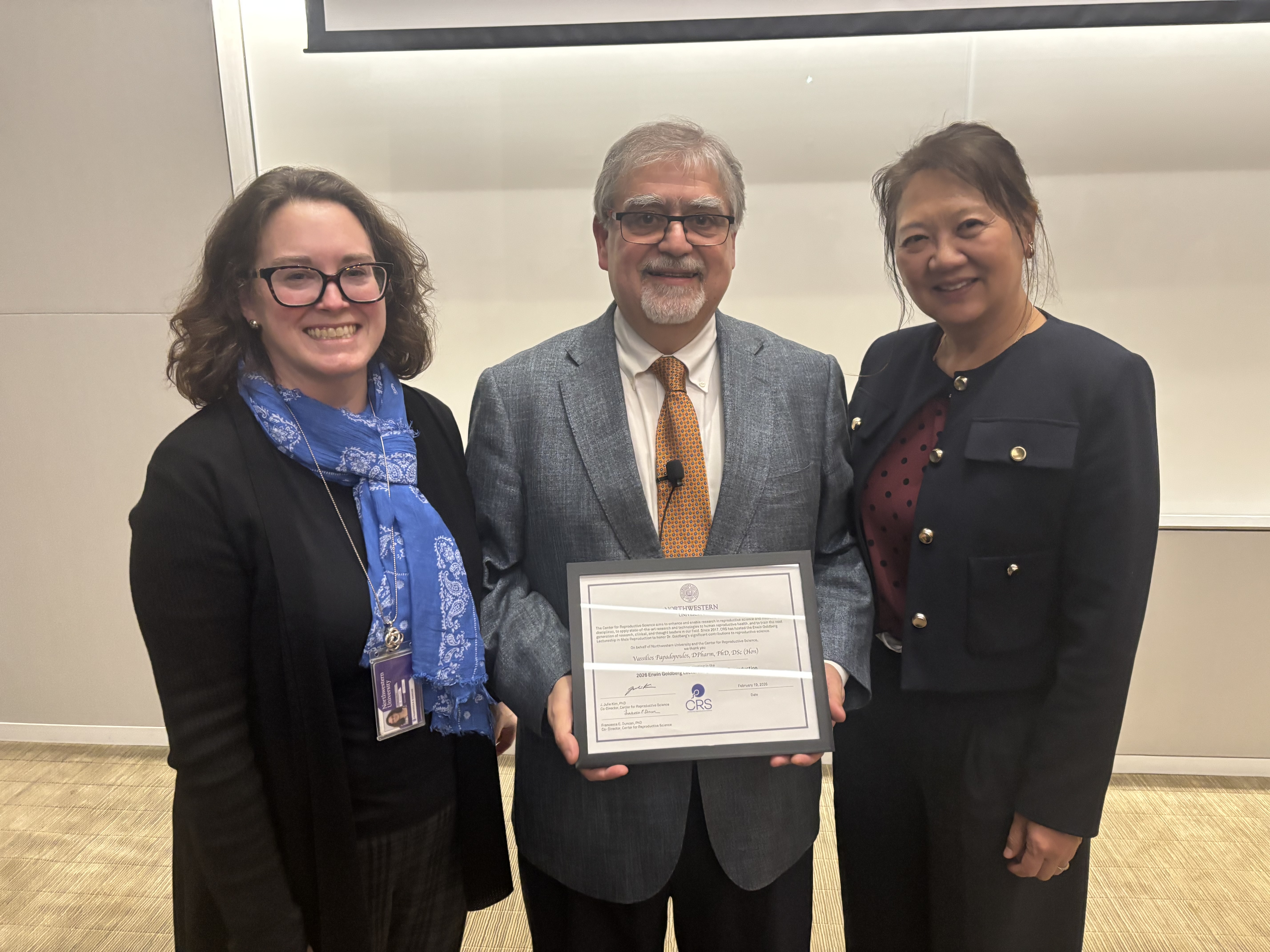
The Goldberg Lectureship honors the legacy of Dr. Erwin Goldberg, whose pioneering discovery of germ cell-specific metabolic pathways transformed understanding of sperm development and male fertility. Dr. Goldberg has been a pillar of Northwestern’s Center for Reproductive Science since 1963. His identification of the testis-specific isozyme LDH-C4, along with gene cloning and disruption studies, established a molecular link between metabolism and male fertility, advancing the diagnosis and understanding of infertility.
Consistent with this tradition, the 2026 lecture focused on how fundamental discoveries in reproductive biology extend far beyond fertility alone and inform broader physiological systems. Central to this year’s lecture was the regulation of steroid hormone biosynthesis and the critical role of mitochondrial function in cellular homeostasis. Steroid production relies on the tightly regulated intracellular transport of cholesterol and the coordination of mitochondrial signaling pathways. These mechanisms support hormonal, immune, and metabolic function; and their disruption affects multiple organ systems, linking reproductive and overall health.
Mechanistically, Dr. Papadopoulos described how environmental and metabolic stressors disrupt steroidogenic signaling, impairing reproductive function and contributing to chronic disease. Clinically, he highlighted evidence that reproductive dysfunction can precede or accompany systemic pathology, positioning reproductive health as an important biological indicator of broader physiological vulnerability. A major focus of the lecture was male hypogonadism and the limitations of testosterone replacement therapy (TRT). Hypogonadism can result from testicular or hypothalamic–pituitary dysfunction and is increasingly linked to aging, environmental exposures, and chronic disease. Although TRT has been standard since the 1940s and can relieve symptoms, it suppresses natural testosterone production and spermatogenesis and may carry cardiovascular and hematologic risks. These limitations led Dr. Papadopoulos and his team to pursue strategies that restore endogenous testosterone rather than simply replace it.
The lecture also highlighted the challenges of translating experimental findings into human systems. While model organisms and cellular platforms have clarified mechanisms of hormone regulation, human reproductive biology is far more complex. Bridging basic discovery with clinical application remains a central goal of translational reproductive science. Building on decades of research, Dr. Papadopoulos’ laboratory has developed bioactive peptides to disrupt molecular interaction that are able to enhance endogenous testosterone production in rodent models without suppressing spermatogenesis, pointing to a potential first-in-class approach that boosts the body’s own hormone production.
Male reproductive health remains understudied despite links between impaired fertility and long-term health. Understanding how environmental and physiological stressors affect reproductive signaling may reveal early disease risk and opportunities for prevention. Advances in molecular and imaging technologies now allow a more precise study of steroidogenesis and mitochondrial dynamics. Continued interdisciplinary collaboration among basic scientists, clinicians, and public health researchers will be essential to translate Dr. Papadopoulos’ laboratory’s advances into clinical practice.
The 2026 Goldberg Lecture highlighted how reproductive biology integrates metabolic, endocrine, and environmental signals, making it sensitive to disruption and a key framework for understanding human health, aging, and disease. Dr. Papadopoulos’ decades-long journey of persistence, mechanistic discovery, and therapeutic innovation reflects the legacy of the Goldberg Lectureship. Rather than relying solely on hormone replacement, emerging strategies aim to restore physiological balance by fine-tuning intrinsic steroidogenic pathways. Questions first explored in fertility research now inform approaches to cancer, metabolic disease, and population health, showing how discoveries in reproductive biology continue to shape the future of medicine.