Alumni Spotlight on Dr. Hideyuki Iwahata
Dr. Hideyuki Iwahata is a clinician and lecturer at St. Marianna University School of Medicine in Kawasaki, Japan. During his time at CRS he was a postdoc in Dr. Teresa Woodruff's lab.
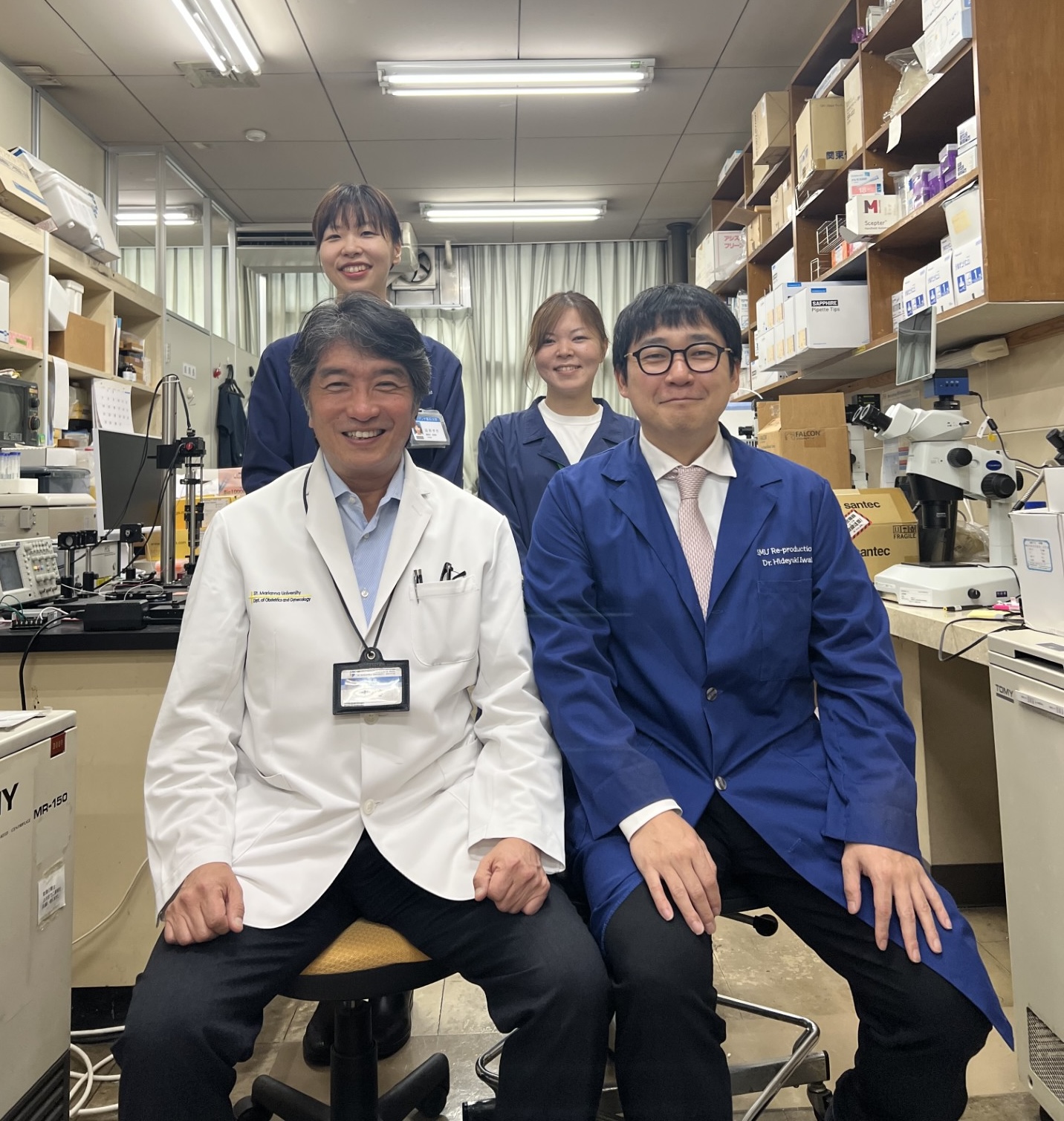
What is your connection to the CRS community and what is your current position?
My career began in clinical medicine, but my involvement in oncofertility brought me into the CRS community, where I had the privilege of learning from many outstanding leaders in reproductive endocrinology and reproductive medicine — through work on in vitro ovarian and follicle culture. Today, I run my own clinic specializing in assisted reproductive technology (ART), reproductive endocrinology, and infertility treatment, while continuing to engage in basic research as a part-time lecturer in the Department of Obstetrics and Gynecology at St. Marianna University School of Medicine under the mentorship of Professor Nao Suzuki.
Could you describe your current research?
Our current research focuses on developing methods to transplant ovarian tissue suspected of harboring metastatic cancer back into patients while minimizing the risk of disease recurrence. We are also investigating the reproductive toxicity of agents used in various cancer treatments — with a particular focus on tyrosine kinase inhibitors used for chronic leukemia — as well as optimizing approaches to ovarian transplantation.
What aspect(s) of CRS did you find most valuable?
One of the most valuable aspects of CRS, in my view, is the opportunity to engage with researchers from remarkably diverse backgrounds. The society brings together basic scientists, clinicians, embryologists, and translational researchers in an environment where open and free-ranging dialogue is genuinely encouraged. Because reproductive biology exists at the direct interface between basic science and clinical medicine, this kind of interdisciplinary exchange feels not just valuable, but essential.
What has been the most valuable aspect to your training as a reproductive scientist in CRS?
In terms of my development as a reproductive scientist, what I gained most from CRS was exposure to rigorous academic discourse and meaningful mentorship. Presenting my work, receiving constructive criticism, and learning to evaluate scientific evidence with a critical eye shaped not only how I approach research, but how I practice clinically. It also deepened my appreciation for translational research — the process of carrying scientific discoveries through to real patient care.
What would you recommend to junior scientists in order for them succeed in their scientific careers?
For young investigators, my advice would be to cultivate intellectual curiosity and to keep sharpening your critical thinking. It's not enough to accumulate knowledge; what matters is developing the habit of asking why — of seeking to understand the underlying structure and mechanisms. Finding a good mentor and actively pursuing collaborative work are equally important. And perhaps above all, research rarely goes the way you expect. The ability to persist through failure and negative results is, I think, one of the most important qualities a researcher can have.
What do you think will be the next big contribution in the reproductive biology field?
I believe the next major advances in reproductive biology will emerge from the integration of multi-omics analysis, artificial intelligence, and personalized medicine. In particular, deeper insight into embryo–endometrial crosstalk, reproductive immunology, and the intrauterine environment holds real promise for substantially improving implantation and live birth rates. I am also convinced that progress in reproductive medicine and progress in oncofertility will continue to move forward together, in close step.
Do you have any notable stories from your time in CRS?
What struck me most about CRS was the openness of the community. Senior investigators engaged with junior researchers with a genuine warmth and generosity that left a lasting impression on me. I also remember how discussions would continue long after formal presentations ended — spontaneous, lively exchanges that spilled well beyond the scheduled sessions. Those interactions were enormously energizing, and they reminded me that scientific progress, at its core, is driven by shared curiosity and collaboration.