Alumni Spotlight on Desiree Franklin
Desiree Franklin is a recent graduate of the MS-RSM program, class of 2026. She completed the thesis track and conducted research with Dr. Aubrey Converse.
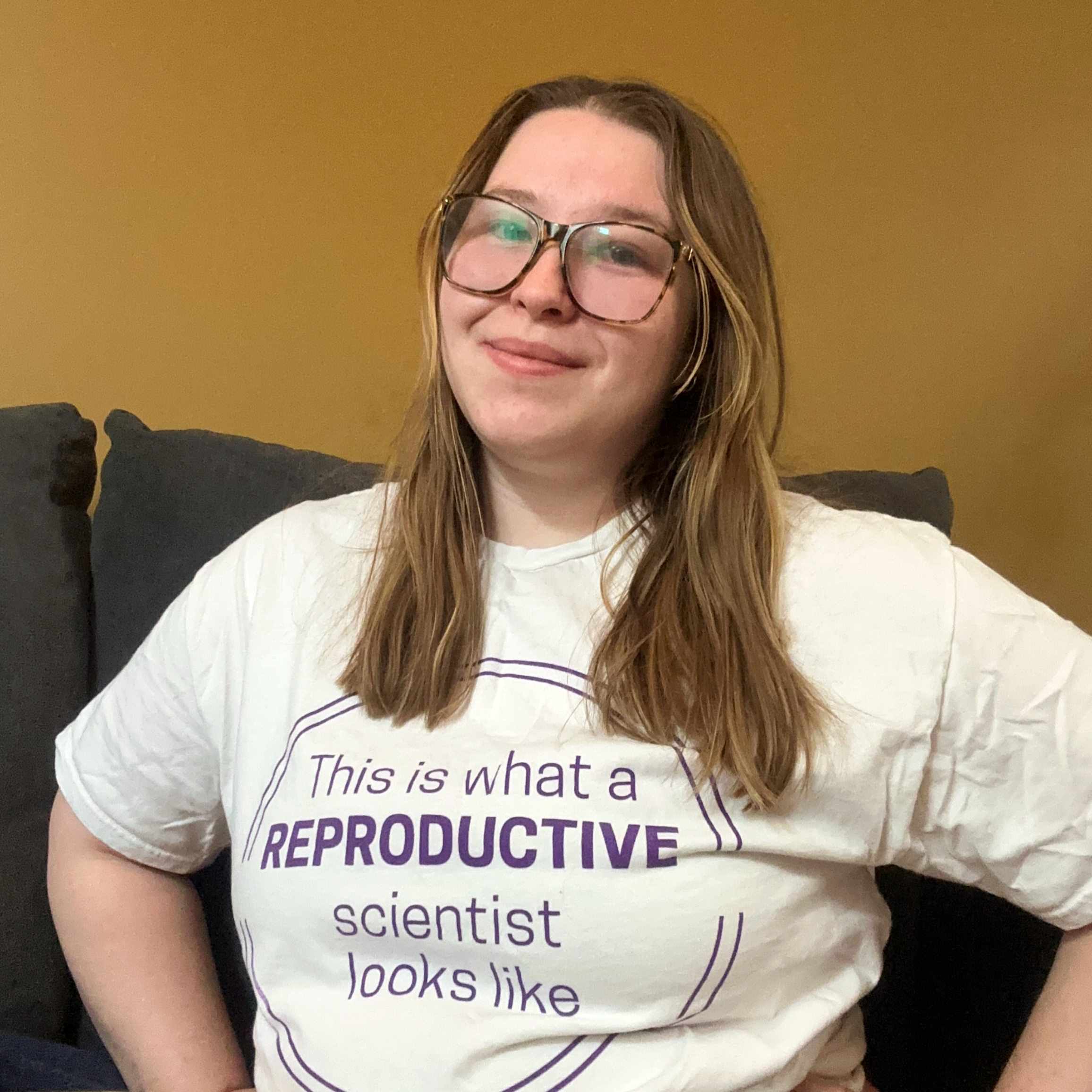
Thesis mentor: Aubrey Converse, PhD
Thesis title: "Development of an ex vivo corpus luteum regression model to elucidate mechanisms contributing to ovarian multinucleated cell formation"
What is your connection to the CRS community (mentor and position) and what is your current position?
I am a recent graduate in the MS-RSM program and was on the thesis track. Additionally, I was one of the student council members in the past academic year, but that is a specific MS-RSM position and not affiliated with CRS.
Could you describe your current research/studies?
We developed an ex-vivo culture system for murine corpus lutea to assess their significance in shifting into a multinucleated giant cell-like identity. The project ended up being more time consuming than originally thought, so I could not fully elucidate the connections between CLs and MNGCs. However, some information that we were able to obtain from my thesis project is helping further our knowledge of this idea and is still in progress.
What aspect(s) of CRS did you find most valuable?
I loved attending the special seminars! The different topics within reproductive health helped me gain a better understanding of cutting-edge research in our field, and hearing firsthand from the researchers is so insightful.
What has been the most valuable aspect to your training as a reproductive scientist in CRS?
I believe the most valuable aspect in being trained as a reproductive scientist is the exposure that I’ve had during my thesis research. Learning about different techniques and topics that other researchers are doing in the lab helped me better understand the gaps in knowledge in the field. I am so thankful for their support in helping troubleshoot aspects of my project so that it can be as successful as possible.
What would you recommend to junior scientists in order for them succeed in their scientific careers?
Please don’t get discouraged by research techniques that do not work how you anticipated! Perseverance and dedication are key traits in becoming a successful researcher.
What do you think will be the next big contribution in the reproductive biology field?
One major positive piece of news within the last few months is the new terminology change from PCOS to PMOS. With this new terminology, we will be able to create better diagnosis criteria. I am hopeful that patients can get better outcomes from this by being able to get a diagnosis and treatment for it! As for a piece of technology, I am so excited for those working with the Gates Foundation to finish their work on creating a new non-hormonal contraceptive! Having access to contraceptives helps lessen public health gaps in less privileged communities around the world. This is a huge project, and I’m so happy to have been able to learn about it while I’ve been at Northwestern.
Do you have any notable stories from your time in CRS?
One of my favorite memories is attending UMSRS 2024. It was one of the first conferences I’ve been to, and being immersed in reproductive science all day was so cool! The speakers throughout the day, plus the poster sessions, were my favorite part. I loved the students from different schools because the topics they were researching were refreshing to hear compared to what I’ve known Northwestern to research. They were so passionate about their research and were so fun to bounce questions off of. I was also so proud to see my upperclassmen present there as well! It really was a great way to introduce all the new MS-RSM students into reproductive science-based conferences, and I’m so thankful that I was able to attend.