Alumni Spotlight on Sam Exner
CRS is a community full of brilliant scientists who are eager to share their expertise and learn about emerging research in the field.
Sam Exner
MS-RSm Class of 2025
Sam Exner is a graduate of the MS-RSM program, class of 2025. She completed the non-thesis track and conducted research with Dr. Lindsey Block and Dr. Pamela Monahan. Sam is currently an andrologist at SpringCreek Fertility in Dayton, OH.
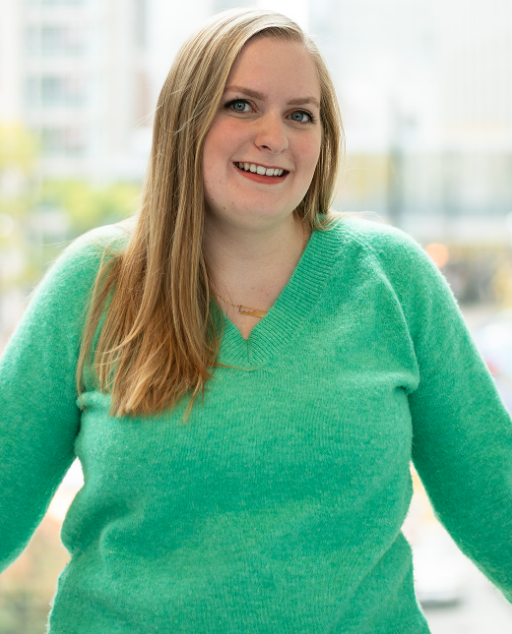
Mentor: Pamela Monahan, PhD and Lindsey Block, PhD
Project title: "Effects of Polyethylene Nanoplastic Exposure on BeWo Cell Viability and Function"
What is your connection to the CRS community (mentor and position) and what is your current position?
In June 2025, I graduated from the non-thesis track of the MS-RSM program under the mentorship of Dr. Pamela Monahan and Dr. Lindsey Block. I am currently working as an andrologist at SpringCreek Fertility in Dayton, OH!
Could you describe your current research/studies?
In the MS-RSM program, my nonthesis project examined the effects of polyethylene nanoplastics on the viability of placental cells and their ability to produce pregnancy-maintaining hormones. I am not currently involved in research, but as an andrologist, I work in the male testing side of fertility care. I perform semen analyses, cryopreserve sperm, and process sperm for in vitro fertilization and intrauterine insemination procedures.
What aspect(s) of CRS did you find most valuable?
For me, the most valuable aspects of CRS were the connections I made, especially within the MS-RSM program. Speaking with people in different positions and hearing different voices within the field of reproductive science helped me explore different paths and discover what I wanted out of my career.
What has been the most valuable aspect to your training as a reproductive scientist in CRS?
One of the most valuable aspects of my training in the MS-RSM was learning how to troubleshoot and pivot when experiments didn’t go as planned. Science, by nature, rarely goes as planned, and it is important to understand what to do when an experiment fails and what steps to take to move forward or switch directions.
What would you recommend to junior scientists in order for them to succeed in their scientific careers?
Ask for help. Use the resources at your disposal, talk about your project with other scientists, and don’t be afraid to ask questions. CRS is a community full of brilliant scientists who are eager to share their expertise and learn about emerging research in the field. It is very important to rely on your mentors and the others in your lab for guidance on your own project, but also to engage with other scientists about their work.
What do you think will be the next big contribution in the reproductive biology field?
I am excited to continue seeing the research that emerges from the field of oncofertility. As an andrologist, many of our patients are cryopreserving sperm before undergoing cancer treatment. We also see a number of patients with oligospermia or azoospermia as adults who went through cancer treatment as children. I am very interested to see breakthroughs in the science of fertility preservation, particularly for prepubertal cancer patients.
Do you have any notable stories from your time in CRS?
As a nonthesis student, I grew close with my cohort and will always treasure the memories we made while working on our project together. One of my favorite memories was going out for lunch to celebrate and decompress together after finding out we all passed our nonthesis exams.