Alumni Spotlight on Cait Egan
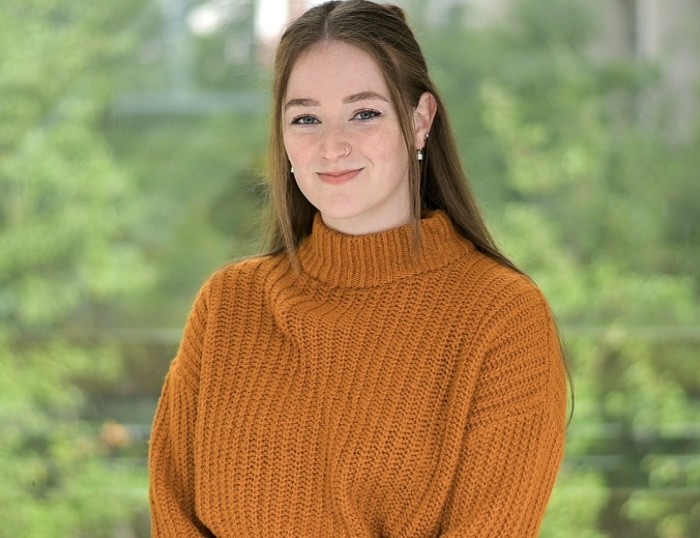
Cait Egan is a MS-RSM alumna, class of 2026. She completed the non-thesis track and conducted research with Dr. Lindsey Block and Dr. Pamela Monahan. She is now working as an andrologist at Northwestern Medicine.
Project Title: "The impact of polystyrene micro-nanoplastic size blend on BeWo cell fusion"
Mentors: Lindsey Block, PhD and Pamela Monahan, PhD
What is your connection to the CRS community (mentor and position) and what is your current position?
I am a recent graduate of the Reproductive Science and Medicine master’s program (MS-RSM). I was on the non-thesis track working and learning under Dr. Monahan and Dr. Block.
Could you describe your current research/studies?
I am currently working under Dr. Joan Riley as an andrologist at Northwestern Medicine. My lab duties consist of performing semen analyses to determine male fertility, semen preparation for intrauterine injections and in-vitro fertilization, as well as cryopreservation of semen samples for various reasons including future conception or preservation prior to cancer treatment. I also prepare patient charts and paperwork for future in-vitro fertilization cycles, egg vitrification and retrievals.
What aspect(s) of CRS did you find most valuable?
The connections I was able to make during the program were super valuable to me. I was able to connect with my current lab manager directly through the CRS program and I believe is what landed me my current job. I was able to meet many other professionals in different areas of the field as well which was very rewarding for me. If I ever wanted to switch paths within the field I feel like there are people I can reach out to for guidance. I was able to volunteer in a research lab within the CRS space, and this allowed me to gain the necessary skills I needed for my current job. I am thankful for that experience as well.
What has been the most valuable aspect to your training as a reproductive scientist in CRS?
I really liked executing the wet lab portion of my non-thesis project. I was able to be trained on many different lab techniques, including the difficult task of confocal microscopy. I also felt like it pushed my brain to problem-solve in ways I did not know I was capable of. There was something so rewarding and satisfying about coming up with a specific hypothesis on my own and testing it in a way I saw fit.
What would you recommend to junior scientists in order for them succeed in their scientific careers?
Network! You may get tired of people telling you that, but all it really takes is just an email or a phone call expressing interest in someone’s work to form a connection. I almost fully attribute networking to my current employment, and the other interviews I got. There are also a lot of opportunities in the CRS community that you can seek out if you want them, whether that be extra lab experience, volunteering, or research opportunities. Reach out to someone doing that work if you are interested. Make the most of your time.
What do you think will be the next big contribution in the reproductive biology field?
I want to keep helping people have families in the way they want to! I love working in IVF and I hope to keep growing where I am at. I could see myself going back to school eventually to be a healthcare provider of some kind in the reproductive science realm, but for now I am grateful to help build families.
Do you have any notable stories from your time in CRS?
During the execution of our non-thesis project, our cells kept dying probably for the first 4 weeks. The trauma bond I built with my fellow non-thesis mates over those cells was awesome. We had a good time I think. I also look very fondly on the sea urchin IVF lab. What a crazy and random experience it was to perform IVF on a sea urchin!